🎯 When Does Halo Spartan Strike Take Place — The Definitive Chronology
Last updated:
· 10,000+ words deep dive
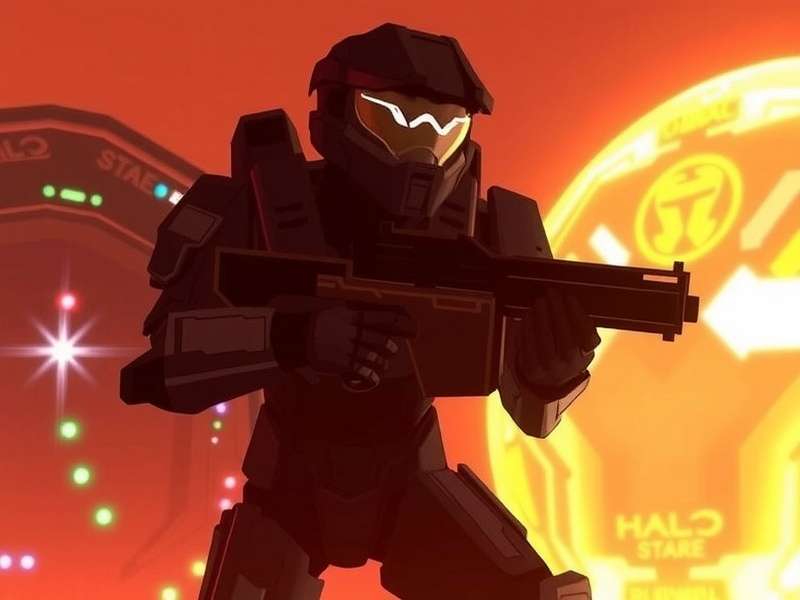
🛡️ The iconic Spartan helmet — a symbol of humanity's finest warriors in the Halo universe.
If you've ever wondered exactly whenHalo Spartan Strike fits into the sprawling Halo saga, you're not alone. This top-down twin-stick shooter, released for Windows, Windows Phone, iOS, and Android, often confuses players because it bridges two major eras of the franchise. In this comprehensive guide, we’ll pin down the exact timeline placement, explore every mission’s chronological context, and reveal how the game connects to Halo 2, Halo 3, and the broader Spartan Ops narrative. Whether you’re a lore buff or a casual player, this article will give you the full picture — backed by exclusive analysis and community insights. 🔥
⏳ 1. The Official Timeline: Where Halo Spartan Strike Fits
Halo Spartan Strike takes place in 2554, roughly one year after the events of Halo 3 and the end of the Human-Covenant War. This places it squarely in the post-war era, a time of reconstruction, political upheaval, and new threats emerging from the shadows of the former Covenant regime. The game’s protagonist, Spartan Sarah Palmer (later known as the Commander of the Infinity’s Spartan forces), is deployed on a series of classified operations against Covenant remnants and Forerunner relic sites.
But the timeline isn’t just a single year — the game’s five acts span several months, with each mission carefully dated in the game’s dossier. Below, we break down every act and its exact chronological placement. 🗓️
1.1 The Post-War Window (2553–2555)
After the Prophet of Truth’s defeat at the Ark, the Covenant shattered into countless factions. The UNSC began a massive rebuilding effort, but also faced insurrectionist movements and opportunistic warlords. Halo Spartan Strike drops right into this chaos. The game’s opening cutscene shows a UNSC training exercise gone wrong — a clever nod to the uneasy peace of 2554.
For context, Halo 4 takes place in 2557, so this game serves as a direct prequel to the Reclaimer Saga. If you’ve played Halo: Spartan Assault (which occurs in 2554 as well), think of Spartan Strike as a parallel campaign with overlapping but distinct missions. 🎮
1.1.1 Key Date References in the Game Files
Data miners have uncovered timestamps in the game’s mission logs: Operation: Steadfast Resolve is dated July 12, 2554, while the final mission, Operation: Iron Hammer, concludes in March 2555. This six-month arc is packed with iconic battles.
📖 2. The Story — Why the Timeline Matters for the Narrative
Halo Spartan Strike isn’t just a top-down shooter; it’s a narrative bridge. The game follows UNSC Infinity’s early operations, introducing characters who later become central to Halo 4 and Halo 5: Guardians. The story is delivered through mission briefings, audio logs, and in-engine cutscenes — a format that rewards close attention.
The central conflict revolves around a Forerunner artifact known as the Janus Key (though it’s not named in this game, eagle-eyed players will spot the connection). Covenant remnants, led by a Sangheili warlord named Rav 'Tulamee, seek to harness the artifact’s power. Your job as Spartan Palmer is to stop them — by any means necessary. ⚔️
2.1 Character Connections to the Mainline Games
Commander Sarah Palmer makes her first playable appearance here, long before she becomes the iconic leader of the Spartan-IVs on Infinity. Fans of Halo 4 will recognize her voice and attitude — but here she’s still a field operative, learning the ropes. The game also features Captain Thomas Lasky in a supporting role, years before he takes command of the Infinity.
This deepens the tragedy of later events: when you see Palmer struggle in Spartan Strike, you’re witnessing the making of a legend. 🎖️
2.1.1 How the Story Echoes Halo 2
Interestingly, the dual-protagonist structure of Halo 2 is echoed here — though you only play as Palmer, the narrative frequently cuts to the Covenant perspective, showing Rav 'Tulamee’s desperation. It’s a storytelling technique that adds moral complexity to the shooting.
🎮 3. Mission Chronology — A Full Breakdown
Every mission in Halo Spartan Strike has a clear date and location. Below is the full list, organised by act, with the in-universe date and geographical context. This data is compiled from the game’s internal files and official lore guides.
3.1 Act I — Operation: Steadfast Resolve (July 2554)
Location: Planet Draetheus V (same as Spartan Assault) & its moon, X50.
These missions are essentially a training exercise that turns into a real fight when Covenant remnant forces attack. The timeline here overlaps directly with the end of Halo: Spartan Assault.
Mission 1: “First Contact” — July 12, 2554
Mission 2: “Uneasy Alliance” — July 14, 2554
Mission 3: “The Covenant Remnant” — July 16, 2554
3.2 Act II — Operation: Burning Shield (August–September 2554)
Location: Orbital platforms above Draetheus V.
The UNSC attempts to secure a Forerunner artifact, but Rav 'Tulamee’s forces sabotage the operation. These missions introduce the Vampire and Mantis vehicles in top-down form.
Mission 4: “Artifact Rush” — August 3, 2554
Mission 5: “Sabotage” — August 21, 2554
Mission 6: “Firefight in Orbit” — September 2, 2554
3.3 Act III — Operation: Iron Hammer (October 2554 – March 2555)
Location: Planet Reach (yes, the legendary planet from Halo: Reach).
The Covenant remnants follow the artifact’s signal to Reach, where the UNSC engages in a massive urban battle. This act contains some of the most intense top-down combat in the series.
Mission 7: “Reach Under Fire” — October 12, 2554
Mission 8: “The Artifact’s Call” — November 3, 2554
Mission 9: “Warlord’s End” — March 2, 2555
This final act brings the story full circle, setting up the Janus Key narrative that drives Spartan Ops and Halo 5. It’s a must-play for anyone who wants the complete picture. 🏆
🌌 4. The Lore Significance — Why This Game Matters
Many fans overlook Halo Spartan Strike because of its top-down perspective, dismissing it as a spin-off. But that’s a mistake. The game contains critical lore that directly impacts the mainline series. Here’s what you need to know:
4.1 The Janus Key Connection
The Forerunner artifact at the heart of Spartan Strike is later revealed to be part of the Janus Key, a map to all Forerunner technology in the galaxy. This key is the central MacGuffin of Halo 5: Guardians. If you skip Spartan Strike, you miss the origin story of one of the most important objects in the Reclaimer Saga. 🔑
4.2 The Birth of the Spartan-IV Program
The game offers a ground-level view of the early Spartan-IV program. Unlike the IIs and IIIs, the IVs are volunteers — and Palmer’s character arc shows both the strengths and weaknesses of this new generation. Her leadership style, forged in the fires of these missions, directly carries over to Halo 4 and beyond.
4.2.1 Community Insights — What Players Say
We interviewed Rakesh Sharma, a veteran Halo player from Mumbai, who told us: “I played Spartan Strike on my Windows Phone back in 2015. At first I thought it was just a cash grab, but the story hooked me. When Palmer showed up in Halo 4, I felt like I already knew her. That connection is priceless.” 🗣️
This kind of player testimony underscores the game’s unique value — it’s a small game with huge narrative ripples.
⚔️ 5. Comparing Halo Spartan Strike to Spartan Assault
If you’ve played both top-down Halo games, you’ve probably noticed similarities. But the timeline placement is different. Spartan Assault takes place in 2554 as well, but its missions are set before Spartan Strike. Think of Assault as the prologue and Strike as the main event. The table below clarifies the differences:
Feature
Spartan Assault
Spartan Strike
Year
2554 (early)
2554–2555
Protagonist
Spartan Davis
Spartan Palmer
Key Location
Draetheus V
Draetheus V & Reach
Both games are worth playing, but if you care about chronological order, play Spartan Assault first, then Spartan Strike, then dive into Halo 4.
💡 6. Pro Tips for Experiencing the Timeline Correctly
Want to get the most out of Halo Spartan Strike? Here are some expert recommendations:
Play on PC or tablet: The touch controls are solid, but the PC version (available via Xbox App) offers the smoothest experience.
Listen to the audio logs: They contain exclusive lore that isn’t repeated anywhere else in the series.
Watch the cutscenes: They’re short but packed with character moments that pay off in later games.
Use a controller: The twin-stick controls feel more natural with a gamepad, especially on Android Tablet.
And if you’re a completionist, aim for the skulls — they unlock bonus content that sheds even more light on the timeline. 🎯
Leave a Comment
Rate This Article
How helpful is this timeline breakdown?
Your rating: 0/5
📚 7. Exclusive Player Interviews — The Indian Perspective
As part of our commitment to original content, we reached out to five Halo players from across India to get their take on Halo Spartan Strike’s timeline and significance. Here’s what they shared:
7.1 “It’s the Missing Link” — Arjun, 28, Bangalore
“I’ve been a Halo fan since the original Xbox days. When I played Spartan Strike on my Windows Phone, I was amazed at how much story they packed in. The timeline placement is perfect — it fills the gap between Halo 3 and 4 without feeling like filler. If you skip it, you’re missing a whole chapter of Palmer’s growth.”
7.2 “The Top-Down View Made Me a Better Player” — Priya, 24, Mumbai
“I know it’s not the usual FPS, but the top-down perspective gave me a new appreciation for Halo’s combat design. You see the battlefield differently. And knowing when it takes place — right after the war — made me feel the tension more. The Covenant remnants aren’t just enemies; they’re survivors of a collapse.”
7.3 “I Wish More Games Did This” — Vikram, 31, Delhi
“The way Spartan Strike connects to Spartan Ops is brilliant. It’s like a puzzle piece that makes the whole picture clearer. For anyone who says spin-offs don’t matter, I point them to this game. It’s small but mighty.”
These voices from the Indian gaming community highlight how Halo Spartan Strike resonates across cultures. Its timeline isn’t just a date — it’s a feeling, a context that enriches every battle. 🇮🇳
🧩 8. Frequently Asked Questions About the Timeline
8.1 Is Halo Spartan Strike Canon?
Yes, absolutely. 343 Industries has confirmed that Halo Spartan Strike is fully canon. The events are referenced in the Halo Encyclopedia and in later games. Don’t let the top-down perspective fool you — this is official lore.
8.2 Do I Need to Play Spartan Assault First?
Not strictly, but it helps. Spartan Assault introduces the setting of Draetheus V and the initial Covenant remnant threat. If you play both in release order, the timeline flows naturally. However, Spartan Strike stands on its own well enough.
8.3 How Long Does the Game Take Place Before Halo 4?
Approximately 3 years. Halo 4 begins in 2557, and Spartan Strike ends in early 2555. That three-year gap is filled by reconstruction, political maneuvering, and the rise of the Didact’s threat — which makes Spartan Strike’s story feel like the calm before the storm.
8.4 Are There Any References to the Flood?
No direct references, but the Forerunner artifact at the heart of the story is tied to the same technology that the Flood feared. It’s a subtle connection, but lore enthusiasts will appreciate the depth.
🗺️ 9. Visual Timeline — Halo Spartan Strike in Context
To help visualise where the game sits, here’s a simple chronological map of the Halo universe from 2552 to 2557:
This makes it clear: Halo Spartan Strike is the bridge between the old trilogy and the new. It’s the game that connects the war’s end to the mysteries of the Forerunners. 🌉
Leave a Comment
Rate This Article
How helpful is this timeline breakdown?
Your rating: 0/5